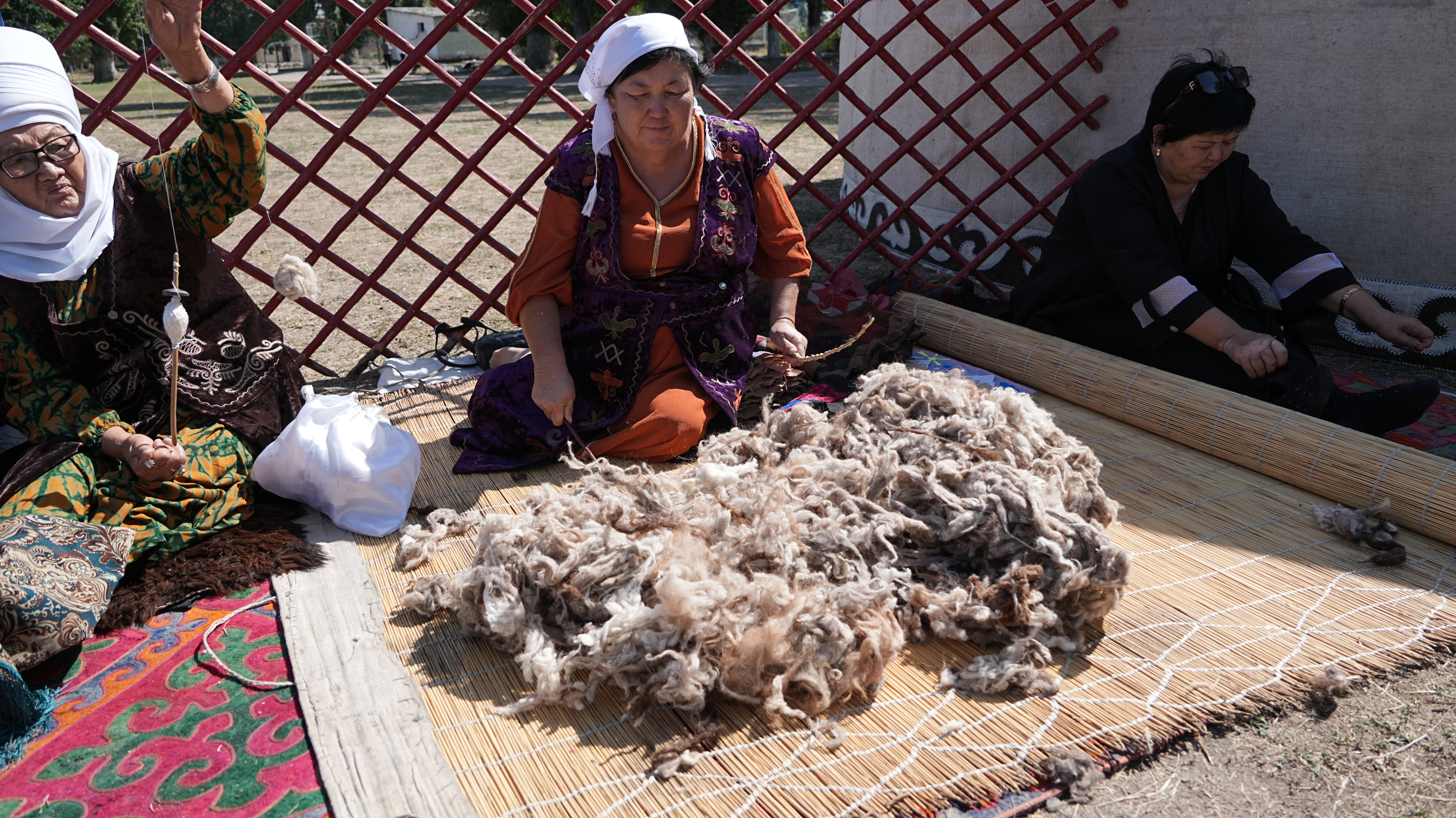
For the Kyrgyz people, the traditional nomadic lifestyle remains an important part of their cultural identity. Many Kyrgyz families in rural areas still follow the seasonal practice of moving their livestock to mountain pastures (jailoos) in the summer, where they live in yurts and tend to their animals. This lifestyle emphasizes self-sufficiency, with an emphasis on animal husbandry, particularly horses, cattle, and sheep.
The Russian population in the Chui region has a lifestyle that combines elements of both traditional Russian and Kyrgyz cultures. Russian families often live in urban centers, with many working in education, government, and commerce. Most ethnic Russians in Kyrgyzstan are either non-religious or Russian Orthodox.
The Dungan people in Kyrgyzstan are Sunni Muslims who speak the Dungan language, a dialect of Chinese written in Cyrillic. Most Dungans are fluent in Kyrgyz and Russian as well. Their language skills allow them to work as interpreters and engage in trade with Chinese businesses.
Historically, farming has been their main occupation, but today, the Dungan community is also known for its thriving restaurant business, particularly national cafes offering delicious Dungan cuisine.
The Ahiska Turks in Kyrgyzstan have improved their economic situation in recent years, transitioning from relying on home ownership to running businesses. Many young Ahiska Turks study in Turkey, pursuing degrees in fields like Computer Engineering, Medicine, and Law.
Traditional practices like animal husbandry and horticulture are still important, with many families raising livestock and growing vegetables for sale. The Ahiska are also known for their dairy products and bread-making.
Culturally, the Ahiska Turks enjoy a vibrant music scene, with traditional and modern performances, while toastmasters play a key role in cultural events.